Finnish start-up Commu wins the international City Resilience Hack competition – community platform to be piloted for crisis resilience in Valencia
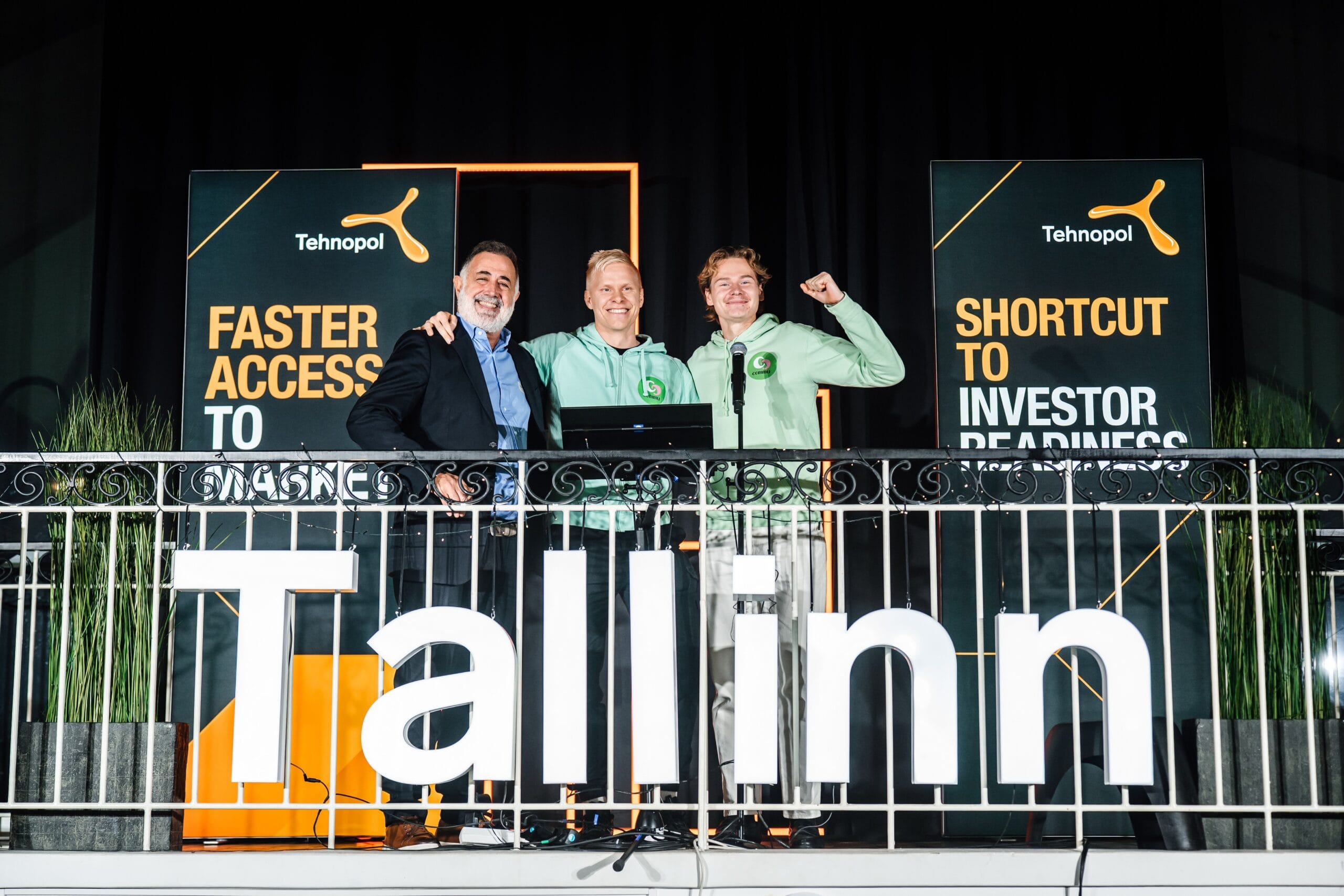
The Finnish community platform Commu won the top prize at the international City Resilience Hack competition held in Tallinn on Friday 25 September. The competition sought solutions for urban crisis resilience. Commu won with a solution that enables local authorities to coordinate residents, communities and volunteers before, during and after a crisis. The prize consists of €30,000 and a pilot project with the City of Valencia.
The City Resilience Hack was organised by the City of Tallinn and Tehnopol as part of Estonia’s Defence Week on 24–25 September. Commu is the first Finnish company to have won the competition. The City of Valencia commented on its decision as follows:
“We particularly appreciated Commu’s community-driven approach. The platform is designed to bring people together, strengthen local networks and make better use of the resources already available in residential areas. We consider this an important part of building the city’s resilience before an emergency arises, rather than only once a crisis is already underway.”
This approach directly addresses a challenge that became particularly evident during the devastating torrential rain and flooding that struck the Valencia region in October 2024: how community support and volunteer networks can be better coordinated during an emergency and, in particular, in the aftermath. Commu can strengthen existing community networks, link them more effectively to rescue and emergency services as well as local authority services, and map out the people, skills and resources available locally. This would ensure that the mobilisation of aid in the event of a crisis is better coordinated, whilst also improving support for people who may be particularly vulnerable in emergency situations.
The team also stood out for its ability to listen and adapt throughout the hackathon. It took on board the feedback provided by the city and, based on this, adapted its proposals to suit the specific circumstances in Valencia. The proposals combined a tried-and-tested solution with the flexibility to respond to the specific needs and priorities identified locally.”
“We are grateful and humbled. This victory shows that there is demand in Europe too for the Finnish way of building trust and shared security. In a crisis, help is always available, but it needs to be delivered quickly to the right place. This is where a digital community platform can help,” says Sami Ekmark, a psychiatric nurse and founder of Commu.
Crisis resilience is built in normal times – pilot in Valencia reaches millions of residents
As part of the pilot, Commu is being piloted across the entire Valencia region, home to around 2.5 million people. In autumn 2024, the region was hit by devastating floods. It was then that it became clear how much the overwhelming desire to help needs support: information must flow, those seeking and offering help must be brought together, and the work of volunteers must be coordinated safely in collaboration with the authorities.
“People want to help, and you always see that in a crisis. It is the local authority’s job to make helping as easy and safe as possible. When residents, organisations and volunteers are already gathered in the same place in everyday life, there is no need to start from scratch when a crisis strikes,” says Ekmark.
The role of local authorities in crisis resilience is growing. The security environment is changing, public finances are under pressure, and trust in other people and institutions is being tested. Crisis resilience does not stem solely from defence or infrastructure. Society can only function during a crisis if people retain their ability to act and trust one another.
Psychological resilience refers to trust in the community and society, faith in the future, and the experience of not being alone. Above all, it is influenced by a person’s sense of security. Facing uncertainty is easier when you know what you can do yourself, who you can turn to, and where to get help in an emergency.
“Mental resilience is a national asset of Finland. Loneliness and a sense of exclusion weaken it, whilst a sense of community and meaningful activity strengthen it. Inclusion is therefore not just a ‘soft’ value but a component of national security. It is built one municipality, one community and one good deed at a time,” says Ekmark.
A tool for local authorities in everyday life and preparedness
In everyday life on Commu, residents help one another and come together, whilst third-sector activities are visible to local residents in one place. The local authority can use Commu to publish news and resident benefits, as well as to involve residents in events and decision-making. Contingency actors and resources can be brought together on the same platform for residents’ information.
Commu is currently developing a preparedness operating model in collaboration with the municipality of Inkoo as part of a project funded by Sitra. Over the coming year, it will become clearer how the platform can be utilised to strengthen mental resilience and preparedness. The pilot in Valencia brings international experience to this work.
Commu has over 30 municipal partners in Finland, and the service has facilitated over 60,000 instances of help. Commu operates in Finland, Sweden, Norway and the UK.
“A digital platform doesn’t reduce face-to-face interaction; it increases it. Everyone has skills and resources, and in a crisis, we need them all,” Ekmark concludes.